

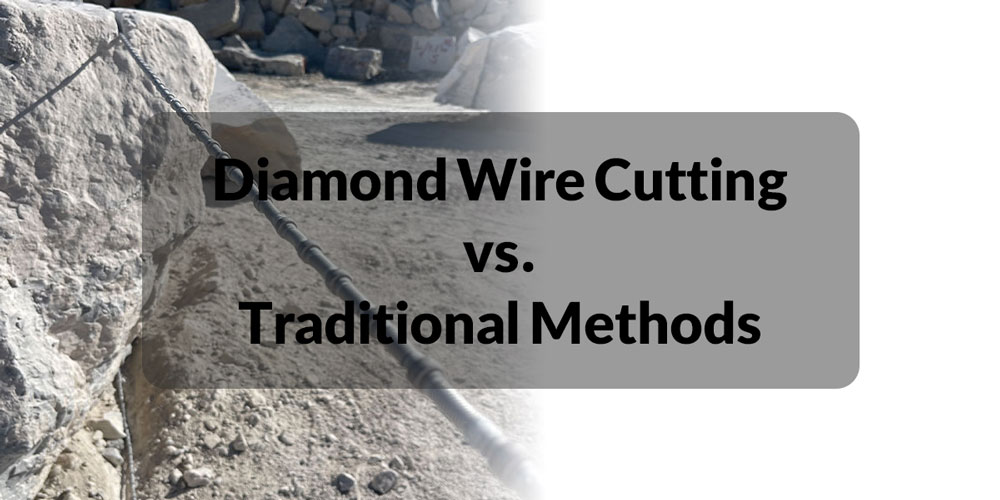
The stone extraction and processing industry is an important sector within mining and construction. In this industry, various methods are used to cut and extract stone from quarries. In the past, traditional techniques such as drilling and blasting, mechanical cutting devices, and older types of saws were widely used. With technological advancement, more modern methods such as diamond wire cutting have entered the industry. This technology has not only increased productivity but also offers significant economic and environmental advantages compared with traditional methods. This article compares diamond wire cutting with traditional stone cutting techniques from both economic and environmental perspectives.
Introduction to Diamond Wire Cutting
Diamond wire is an advanced cutting tool consisting of a steel cable on which industrial diamond beads are mounted. Because diamonds are extremely hard, these beads are capable of cutting various types of hard stones such as granite, marble, and travertine. In this method, the wire moves around the stone at high speed and gradually performs the cutting process. The diamond wire cutting system is usually used together with guiding devices and a water cooling system to prevent overheating and to ensure more precise cutting.
Due to its high precision, suitable cutting speed, and reduced material loss, this method has rapidly replaced many older techniques in numerous quarries and stone processing workshops.
Traditional Stone Cutting Methods
Traditional stone cutting methods include techniques such as drilling and blasting, the use of older mechanical saws, and impact tools used to separate stone from the rock mass. In the blasting method, holes are first drilled into the rock and then filled with explosives to break the stone and separate it from the main mass. Although this method was widely used in the past, it is difficult to control the exact shape and size of the extracted stone blocks.
In other traditional methods such as older saw systems, steel blades and abrasive materials are used to cut the stone. These approaches generally operate at slower speeds and often result in higher levels of material waste.
Economic Comparison
From an economic perspective, the use of diamond wire is often more cost‑effective than traditional methods. One of the most important economic advantages of this technology is the higher recovery rate of stone blocks during extraction. In blasting methods, a large portion of the stone becomes unusable due to unwanted fractures. However, diamond wire cutting allows the extraction of large and intact blocks with minimal damage.
The high precision of cutting also significantly reduces stone waste. This leads to better utilization of mineral resources and increased profitability for quarry operations. In addition, labor costs can decrease because many processes are mechanized, reducing the need for heavy manual labor.
Another important factor in the economic comparison is the reduction in extraction time. Diamond wire can cut stone faster than many traditional methods. Shorter operation times mean increased production capacity and lower operational costs in the long term.
However, it should be noted that the initial investment required for diamond wire equipment is generally higher than that of some traditional techniques. Cutting machines and diamond wires require a considerable upfront investment. Nevertheless, over time, the reduction in waste, improved product quality, and lower operational costs typically justify the investment.
Environmental Comparison
One of the main reasons for the growing adoption of diamond wire technology is its lower environmental impact compared with traditional methods. In blasting operations, strong ground vibrations, significant dust generation, and high levels of noise pollution are common problems. These factors can negatively affect the environment as well as the health of workers and residents living near quarry sites.
In contrast, diamond wire cutting is a relatively quiet and controlled process. The level of vibration is very low, which reduces the risk of damage to nearby structures or natural surroundings. Additionally, dust production is lower because water is typically used during the cutting process to cool the wire and reduce airborne particles.
Reduced noise pollution is another important advantage of this method. Explosive or impact-based techniques generate very loud sounds that can disturb surrounding areas. Diamond wire machines, however, produce significantly less noise.
From the perspective of natural resource conservation, diamond wire cutting is also a better option. Because this method enables the extraction of larger and more intact stone blocks, material loss is minimized. Lower waste levels mean more efficient use of mineral resources and reduced pressure for further extraction from nature.
Workplace Safety
Safety is another important factor when selecting stone cutting methods. Traditional approaches—especially blasting—can pose serious risks for workers. Handling explosives, potential rock falls, and unpredictable cracking patterns can lead to dangerous situations.
By contrast, diamond wire cutting offers a more controlled process and generally improves worker safety. Operators can manage much of the process from a safe distance using machinery, which reduces the likelihood of accidents.
Conclusion
With technological progress in the mining and stone processing industries, modern methods such as diamond wire cutting are becoming increasingly common. A comparison between this method and traditional techniques shows that diamond wire cutting offers considerable economic and environmental benefits. Reduced stone waste, higher-quality extracted blocks, lower environmental pollution, and improved safety are among the most significant advantages of this technology.
Although the initial investment for diamond wire equipment may be relatively high, in the long run it becomes a highly cost‑effective option for stone quarries due to increased productivity and lower operational costs. Therefore, expanding the use of diamond wire technology can be seen not only as an economically sound decision but also as an important step toward sustainable development and environmental protection.