

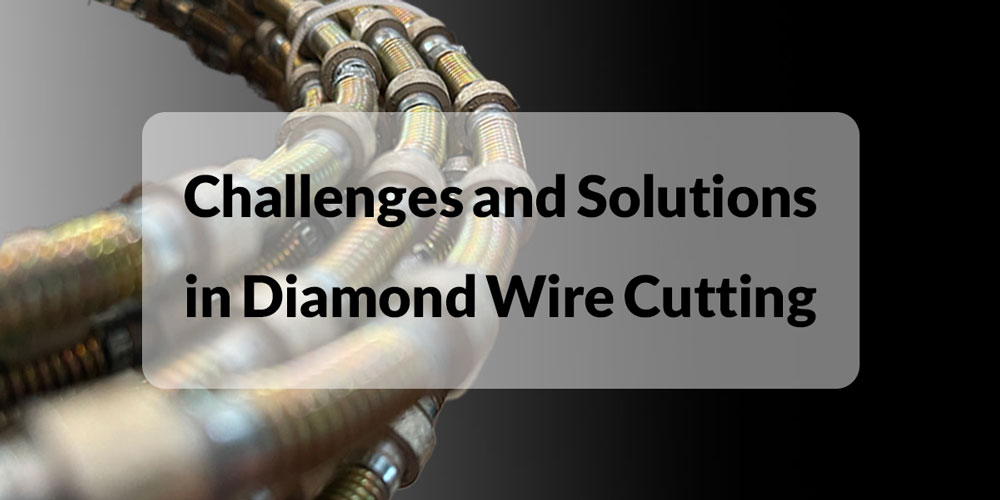
Cutting hard stones in mining, stone processing, and construction industries has always been a complex operation requiring precision, high power, and appropriate technology. In recent decades, diamond wire technology has become one of the most efficient methods for cutting various hard stones such as granite, basalt, dense marble, and quartz-based rocks. This technology has replaced many traditional cutting methods due to its high cutting speed, better surface quality, reduced vibration, and lower energy consumption.
However, using diamond wire for cutting hard stones comes with certain challenges and requires proper technical solutions, standardized equipment, and correct operational management.
This article examines the main challenges in cutting hard stones with a diamond wire saw and provides practical and technical solutions to improve performance, extend wire life, reduce costs, and enhance safety.
Major Challenges in Cutting Hard Stones with Diamond Wire
1. Stone Hardness and Heterogeneity
One of the most significant challenges in diamond wire cutting is the high hardness of certain stones. Rocks such as granite and quartz have high compressive strength and abrasion resistance, which increases the rate of wear on diamond beads. Additionally, heterogeneity in stone structure—such as veins, cracks, and silica-rich inclusions—causes unpredictable variations in pressure applied to the wire.
2. Rapid Wear of Diamond Beads
If the pressure on the wire is not properly controlled or if adequate cooling water is not supplied, the diamond beads wear excessively, reducing wire lifespan. This issue becomes more severe in extremely hard or coarse-grained rocks, leading to higher operational costs.
3. High Temperature and Inadequate Cooling
Friction between diamond beads and the stone generates heat rapidly. Elevated temperature can reduce wire lifespan, degrade cutting quality, increase stone cracking, and even cause wire breakage. Securing a sufficient water supply in dry regions or high-altitude sites can also be a serious challenge.
4. Wire Jamming During Cutting
A common problem is wire jamming due to sudden deformation of the stone, debris falling into the cut, lateral pressure, or improper path alignment. This may lead to operational stoppage or wire breakage.
5. Improper Wire Tension
Wire tension must be maintained within a specific range.
- Excessive tension increases bead wear and wire breakage risk.
- Low tension causes wire slippage, reduced cutting speed, and uneven grooves.
6. Equipment-Related Issues
Failures in the pulley system, bearings, motor, and hydraulic units directly affect cutting performance. Low-quality machines often lack accurate control over wire speed and tension, increasing the likelihood of operational problems.
7. Safety Risks and Wire Breakage
Wire breakage at high speeds is hazardous. It typically occurs due to excessive wear, high tension, or sudden impact with obstacles inside the stone, posing a serious threat to operators.
Technical and Practical Solutions for Improving Diamond Wire Cutting Performance
1. Selecting the Right Diamond Wire
Proper wire selection based on the stone’s hardness, density, and structure is essential. For very hard stones, high-quality wires with strong diamond beads, durable joints, and reinforced coating should be used. Selecting an appropriate bond type significantly increases wire lifespan.
2. Accurate Control of Wire Speed
Wire speed must be adjusted according to stone hardness:
- Higher speeds for soft stones
- Lower speeds for hard stones to reduce pressure and temperature
Ignoring this parameter often leads to improper bead wear and wire breakage.
3. Adequate Water Supply and Efficient Cooling System
Water quality, flow rate, and spray direction are crucial in reducing friction and heat.
Recommended practices include:
- Using high-capacity pumps and standard nozzles
- Installing water storage and recirculation systems in dry regions
- Ensuring water is sprayed directly onto the contact zone
4. Wire Tension Control
Automatic tensioning systems significantly improve safety and efficiency. Sensors used to monitor tension help prevent breakage and prolong bead life.
5. Proper Cutting Path Design
Path design plays a major role in preventing wire jamming. The chosen path should minimize lateral forces on the wire. Stone inspection before cutting helps identify cracks, voids, or irregularities.
6. Regular Maintenance of Equipment
Preventive maintenance should include:
- Pulley inspections
- Checking bearings
- Monitoring motor and hydraulic system
- Replacing worn components
This approach prevents sudden failures and improves cutting reliability.
7. Periodic Inspection of Diamond Beads
Frequent inspection helps detect issues such as uneven wear or bead locking before they cause major damage. This reduces the likelihood of wire breakage and lowers operational cost.
8. Enhancing Operational Safety
For improved safety:
- Operators must stand at a safe distance
- Protective barriers should be installed
- The movement area of the wire must be restricted
- Workers should receive proper training
9. Adopting Modern Technologies
Recent advancements in diamond wire technology have introduced features such as:
- Smart speed control
- Real‑time wear monitoring
- Predictive algorithms for wire breakage
- Automated cutting path guidance
These innovations significantly improve cutting efficiency and reliability.
Conclusion
Diamond wire technology is one of the most efficient and precise methods for cutting hard stones in mining and construction industries. However, achieving optimal results requires proper management of challenges such as stone hardness, bead wear, heat generation, tension control, water supply, path design, and safety measures.
The solutions provided in this article can help increase productivity, reduce operational costs, extend wire lifespan, and improve cutting quality. Using standard equipment, trained personnel, and modern technologies elevates the overall performance of diamond wire cutting operations and reduces the limitations of traditional methods.